End Application
Injection-molded ESD chair
Industrial Furniture Manufacturer
Injection-molded Electrostatic Discharge (ESD) chair for
cleanrooms and other static-sensitive manufacturing
environments.
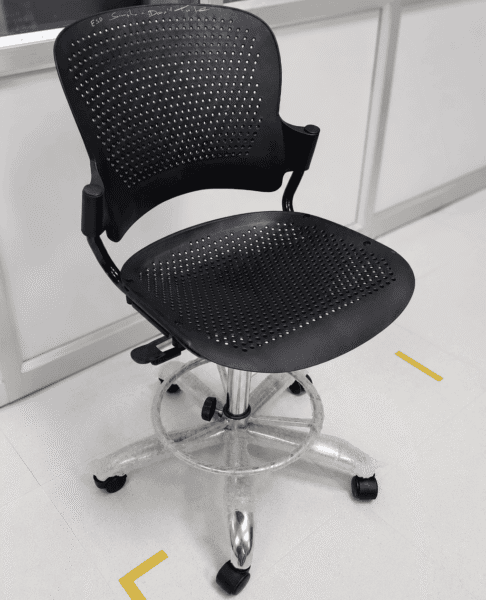
An industrial furniture manufacturer set out to transform an existing ESD vinyl foam chair into a durable injection-molded seating solution using a custom conductive polyamide compound.
The opportunity extended beyond replacing one material with another. A molded engineering thermoplastic design offered the potential for greater durability, improved cleanability, consistent appearance, and more scalable manufacturing. Achieving those advantages required integrating electrical performance, structural durability, molded aesthetics, and manufacturing consistency into a single material solution.
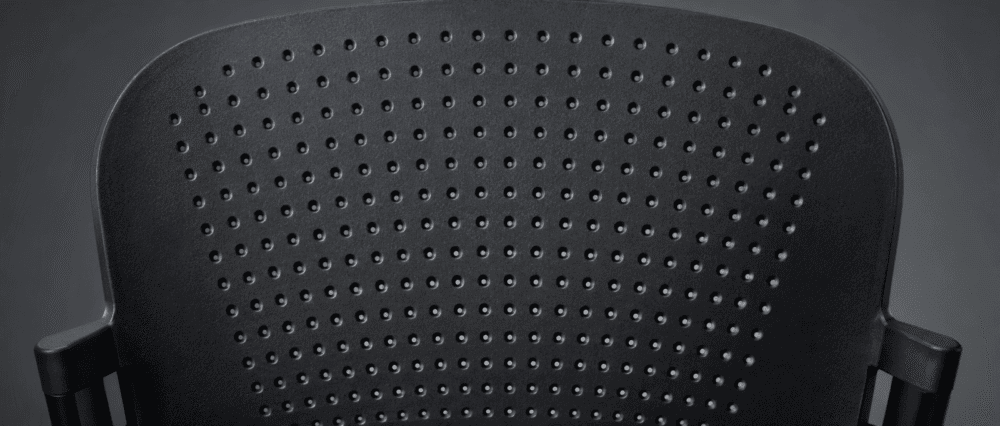
Unlike many conductive plastic components hidden within an assembly, the chair performs three jobs at once. It provides structural support, safely dissipates static electricity, and remains a visible finished product throughout its service life.
The new design needed to achieve a target surface resistivity of 1 × 10⁶ to 1 × 10⁹ Ohm, support a 120 kg load requirement and 100,000-cycle durability target, and produce a deep black molded surface with minimal visible flow marks. It also needed the consistency required for commercial production in cleanrooms and other static-sensitive manufacturing environments.
Conductivity, strength, flow behavior, dimensional stability, and appearance all influence one another. Any compromise could delay qualification and prevent the customer from moving beyond the existing vinyl foam design.
Americhem partnered with the customer to develop the application-specific material that made the design transition possible.
Using InElec® conductive technology, Americhem developed a custom conductive polyamide compound engineered to meet the customer’s electrical, mechanical, aesthetic, processing, and manufacturing requirements. The formulation delivered stable electrical performance, structural durability, molded appearance, and injection molding processability within one custom solution.
Internal evaluation confirmed approximately 1 × 10⁷ Ohm surface resistivity, meeting the customer’s electrical performance target while supporting the chair’s mechanical and cosmetic requirements. The compound also delivered consistent conductive dispersion, high-jetness
black color, and molded surface quality suitable for a visible industrial product.
Throughout development, Americhem worked alongside the customer’s engineering team through material selection, formulation development, sampling, and technical evaluation, helping align material performance with product design, manufacturing requirements, and commercial qualification objectives.
Developing high-performance polymer products rarely comes down to a single material property. Success depends on how electrical, mechanical, aesthetic, processing, regulatory, and manufacturing requirements perform together in the finished product.
Americhem specializes in developing custom polymer solutions around complete product requirements, not individual material specifications. Every solution is tailored to the application, manufacturing process, and performance objectives, allowing multiple performance requirements to work together within a single solution rather than forcing tradeoffs between them.
That capability extends well beyond ESD seating. Whether developing products for cleanrooms, healthcare, transportation, fibers, industrial equipment, or building and construction, manufacturers partner with Americhem to solve complex material challenges through custom polymer solutions engineered for their application, process, and commercial objectives.
As industries demand smarter, safer, and more sustainable products, material innovation becomes a strategic differentiator. Americhem helps customers transform complex engineering challenges into competitive advantages through customized polymer solutions engineered for long-term performance, manufacturability, and commercial success.
The customer successfully completed internal evaluation of Americhem’s custom InElec® conductive polyamide compound for its molded ESD chair.
Internal testing reported satisfactory results against the program’s electrical, mechanical, molding, and appearance objectives. The compound achieved approximately 1 × 10⁷ Ohm surface resistivity while delivering the molded surface quality required for commercial production.
Following successful internal validation, the program advanced to third-party testing as part of the commercial qualification process. The project positioned the customer to transition from a traditional upholstered ESD chair to a durable injection-molded solution for demanding cleanroom and static-sensitive manufacturing environments.
Get the latest insights on custom compounds, masterbatch technology, additives, and polymer performance.
Download the complete case study as a PDF for detailed insights, data, and results you can share with your team.
Injection-molded ESD chair
Custom Americhem InElec® conductive polyamide compound
1 × 10⁶ to 1 × 10⁹ Ohm target; approximately 1 × 10⁷ Ohm achieved
120 kg load; 100,000-cycle target
Cleanrooms and static-sensitive
manufacturing
Optimized for injection-molding and
conductive dispersion
Vinyl foam to injection-molded conductive polyamide seating solution
Successful internal validation; third-party testing initiated
Stay informed about the latest trends, technologies, and best practices in the world of polymers.