
- Products & Materials
-
-
-
Product Families
-
-
-
-
Products & Materials
We collaborate closely with your team to deliver application-specific plastic compounds and accelerate your time to market.
-
-
- Industries
-
-
Solutions for Your Industry
We work with manufacturers in high-stakes industries like healthcare, automotive, electronics and building materials where performance, compliance and reliability are essential.
-
- Building & ConstructionMaterials that withstand weather, UV, and structural demands in outdoor and load-bearing applications.
- TransportationEngineered compounds built for durability, compliance, and reliability across vehicles, aircraft, ag, and power sports.
- FibersSoftness, strength, and stability for nonwovens, synthetic turf, hygiene products, and performance textiles.
-
- PackagingCustom masterbatches and additives for barrier performance, clarity, and sustainable packaging formats.
- HealthcareMedical-grade materials engineered for biocompatibility, sterilization, and global regulatory compliance.
- ElectronicsFlame-retardant, antistatic, and heat-resistant compounds for electronic housings and sensitive components.
-
-
- Services & Expertise
-
-
Services & Expertise
Americhem isn’t just a compounder, we are a full-service extension of your engineering, marketing, and product development teams.
-
-
- About
-
-
About Americhem
For more than eight decades, Americham has been your trusted global partner in designing and manufacturing polymer solutions.
-
-
- Talk to an Expert
Functional Additives: From Processing to Real-World Performance
Industries: Fibers
Topics: Functional Additives, Fiber Processing, Processing Stability, Durability, Additive Integration
Functional Additives: From Processing to Real-World Performance
See how additive integration, processing stability, and polymer-level performance influence durability and consistency across fiber applications.
Video Insights:
- Reduce variability during fiber processing
- Support durability and end-use performance
- Improve additive integration at scale
00:00:02:01 – 00:00:26:05
Fibers are everywhere: in medical gowns protecting caregivers, in hygiene products used every day, and in items like carpeting, artificial turf, filtration media, and performance apparel. And expectations are rising fast: safer, more durable, more sustainable, more comfortable. The performance may be invisible, but the engineering behind it isn’t.
00:00:26:05 – 00:00:28:22
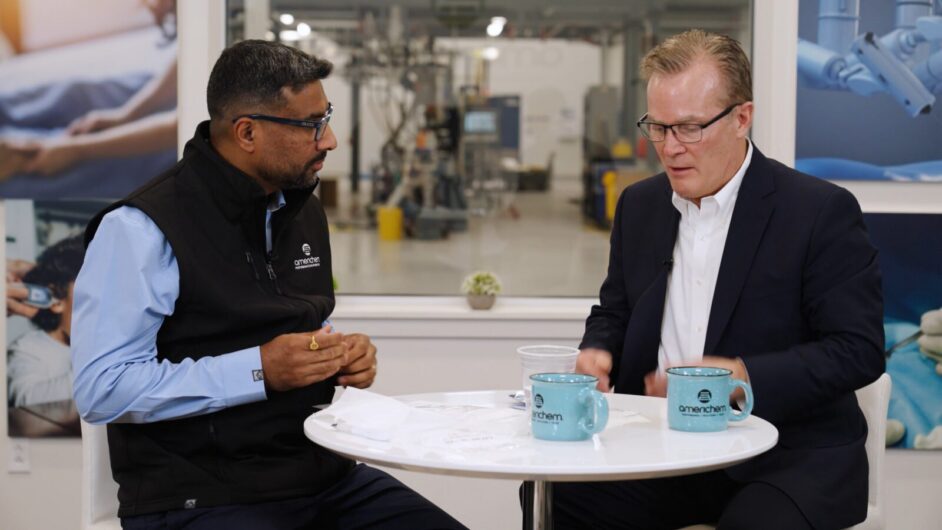
I’m Matt Miklos, and this is In Practice.
00:00:31:07 – 00:01:05:19
Today we’re talking about what it really takes to engineer next generation fiber performance under evolving regulations, shifting consumer demands, and real world production pressure. I’m joined by somebody I’ve known for a long time, Doctor Pavan Maheswaram. Pavan, you’ve been in analytical roles, product development, more recently business development, and now, in your role as global market manager, that puts you in a different seat than just pure R&D.
00:01:05:21 – 00:01:29:22
What does the role really mean to you? It means listening first. My responsibility in this job is trying to understand what our customers are facing across different regions and trying to understand those needs and translate those into measurable, scalable solutions to our end customers and to our customers as well. So I’m talking to product managers, operations leaders, sustainability managers.
00:01:30:00 – 00:01:56:00
One thing is very clear: these are not isolated technical issues that they’re facing. These are more strategic issues like performance, regulatory compliance, scalability, and cost. It is what it is, and it’s all interlinked. Speaking of different regions, you just returned from travel to India and to China, and of course you know the Americas quite well. Sitting across from manufacturers in these regions, what are you seeing?
00:01:56:02 – 00:02:23:06
What surprised me most, Matt, is how these pressures are aligned, especially in India where there is rapid growth, especially in the medical nonwovens and hygiene market spaces. That growth requires efficiency, especially when lines are running at very high speeds. Downtime isn’t accepted.
00:02:23:06 – 00:02:44:20
In China, production volumes are massive. Even a slight variation in quality or performance of the product would drastically change throughput for the customer. So that’s not acceptable either. In North America and Europe, PFAS regulations are accelerating at a faster pace. PFAS elimination, documentation scrutiny, and sustainability mandates are all being put in place.
00:02:45:01 – 00:03:08:23
Different regions, same underlying tension. Customers want more performance without more risk. What is interesting is that earlier these issues used to surface regionally at different paces. Now everything is happening at once because customers are globally established and are serving different customers around the world. That’s why it is happening at the fastest speed and all at once.
00:03:08:23 – 00:03:32:09
So the geography is changing, and the engineering pressures are ramping. Yeah, exactly, Matt. They’re asking: Will it survive processing? Will it survive use? Will it survive regulations? That being said, that’s how innovation is defined nowadays in fibers. So let’s start there. Are customers always solving for the right problem?
00:03:32:11 – 00:03:57:13
Not always, Matt. Sometimes they think they’re adding a feature to an end product like repellency, softness, or antimicrobial performance, but in fibers you’re engineering in a melt-spun system. So you need to ask: How does it disperse properly? How does it affect bonding? Are we meeting regulatory scrutiny years from now, maybe five years from now?
00:03:57:13 – 00:04:18:00
So that being said, if you don’t define the system properly initially, then it would be a big risk. So let’s talk about the fiber spin lines. It’s different from the molding industry. Fiber spin lines are very unforgiving. Why is that?
00:04:18:02 – 00:04:38:16
Because everything is amplified, Matt. You have high temperatures, high shear, extremely fine fibers, and different application speeds. There’s no margin for instability at all. So if the dispersion isn’t uniform, then you will see spin breaks, spinning issues. If there is no thermal stability, you’ll see degradation right away.
00:04:38:18 – 00:04:58:13
You’ll see buildup on the spinneret face and so on. You’ll see drippings if it’s a nonwoven process. At the same time, if the additive is interfering, it causes fiber inconsistency. Especially for a continuous filament fiber line, you have fibers in there, which causes spin breaks right away.
00:04:58:13 – 00:05:18:00
And if it’s a nonwoven, you could see hotspots on the nonwoven end. So processing is the first validation step. If it’s not running cleanly, then nothing matters. So don’t name any names, but what’s a real world example of that playing out?
00:05:18:02 – 00:05:39:20
So we were working with a manufacturer. We were transitioning from a legacy product. On a pilot scale, everything ran well. But when we went to a higher scale production trial, we had issues right away where you could see spinning issues, processability issues, and so on.
00:05:39:20 – 00:06:06:18
So that being said, what I believe is especially from pilot scale to scale-up, there has to be a transition. Everything has to streamline from a small line to a semi-commercial line to a commercial line. So in this case, the chemistry worked, but the system didn’t.
00:06:06:20 – 00:06:27:10
So we shifted the conversation from how it performed well to what it needs to process well. In that instance, we had to go back and ask: How did it interact with the polymer? How was the dispersion? How was the bonding?
00:06:27:13 – 00:06:47:08
I’m giving you different examples in terms of what we ask our customers when processing issues come up. That move from substitution to integration made that big change, and we got a good outcome from it. That’s great. So performance in a lab and in isolation just isn’t the same as at scale, is it?
00:06:47:10 – 00:07:13:22
Yeah, exactly. Integration is what earns trust. So let’s switch gears a little bit and let’s talk about long-term use. Assume it runs well. Now it’s in the field. What determines whether performance will last? Durability.
00:07:14:00 – 00:07:35:02
If it’s in hygiene applications, it is more about repeated fluid contact. In medical applications, it’s alcohol repellency. In carpet applications, you’ll see staining or cleaning cycles. And at the same time, in outdoor turf applications, UV and weathering are what matter.
00:07:35:07 – 00:08:07:15
So initial performance is easy. Sustained performance under stress, that’s what engineering is. If performance fades, trust fades with our customers. So let’s make this more tangible. I heard repeated fluid contact. I heard oils and chemicals, alcohol repellency. It sounds like there are a lot of fluid management issues at play here. How is Americhem chasing that challenge?
00:08:07:15 – 00:08:29:12
So we approach it as a platform opportunity for us. We have a product offering called nDryve™, which is a PFAS-free in-melt additive system that is integrated into the fiber structure, where it gives repellency against multiple fluids like oil, alcohol, and stain resistance in different fiber systems.
00:08:29:13 – 00:08:51:05
So for those in the audience that may not know the term, what does it mean to be PFAS-free? Fluorinated-free. These are compounds related to per- and polyfluoroalkyl substances. So it’s free of those related compounds, which have been around forever in the industry and in the market.
00:08:51:05 – 00:09:31:22
PFAS-free, this isn’t just about regulatory transitions. There seems to be more to it. Yes, you’re right, Matt. It’s about durability. It’s about processing discipline. It’s about compliance. Simultaneously, everything is needed. Modern day fiber systems need performance that survives processing, survives use, and does so without creating operational friction.
00:09:31:22 – 00:09:58:20
I see you brought some interesting samples today. Can you show me what’s new? In terms of softness products that we offer, you’re trying to improve the surface properties or the tactile qualities of the fibers, especially in applications where softness matters. Here is an untreated polypropylene nonwoven fabric swatch. You can feel how rough it feels, almost paper-like.
00:09:58:20 – 00:10:31:19
Yes, and a little bit of roughness. This is a nonwoven sample treated with a softness product from our Embrace™ platform, which improves the tactile quality. Yeah, much more — almost silky. It’s almost like we’ve reduced the coefficient of friction when you rub two layers together. Yeah, silky and soft.
00:10:31:19 – 00:10:50:14
Especially in the market space, many customers use topical solutions, but we are trying to offer an in-built additive system. In a hygiene application, I assume that’s where this is going to be most commonly used. How many layers of nonwoven fiber would typically be in such a structure?
00:10:50:14 – 00:11:13:23
Normally within a diaper there are 13 to 14 layers. There would be multiple layers, so it goes into a topsheet and other constructions and so on. I imagine once you multiply the number of plies, so to speak, that softness is felt even more and more compared to an untreated fiber. Yes. As you can see, it’s papery.
00:11:14:01 – 00:11:41:16
At the same time, I have another product I can showcase. I can use the same sample as a control. We are also offering hydrophilic products that go into medical applications or hygiene applications. So I have untreated fabric where, if you put in some water, you would see it doesn’t absorb because polypropylene is hydrophobic in nature.
00:11:41:18 – 00:12:13:21
As you can see, this is one of our in-additive technologies for hydrophilic performance. As you put in the water, it readily absorbs. You can see it’s hydrophilic — it likes water. It’s pulling it into the structure. So it loves water, that’s why it’s absorbing. It gives a better capillary action compared to an untreated fiber where you can see it beads up and is literally running off the construction onto the table.
00:12:13:21 – 00:12:39:06
Yes, and here it is highly absorbent. And that’s done through in-melt chemistry? Yes. So the same polymer matrix? Yes, same polymer matrix. Especially with some of our next generation products, we are trying to offer combo properties — both soft and hydrophilic at the same time. So an additive that gives softness to a product and also hydrophilic performance to the product.
00:12:39:08 – 00:13:04:09
Fantastic. And then in terms of our nDryve™ technology that we are offering, I have two products. This is polyester fabric which is untreated, and then I have a treated fabric with our nDryve™ technology.
00:13:04:11 – 00:13:26:19
So what I’m going to try to do is showcase how you’re trying to incorporate hydrophobic properties in a polyester fabric. Polyester is polar in nature. It loves water. It absorbs. So as you can see, right away it absorbs quickly. And here I’m going to put a drop on it and it beads up.
00:13:26:21 – 00:13:50:07
Yeah. In this case, the bead is literally sitting on the surface. Same chemistry with regard to the base polymer? Yeah. Here you can see it wick in right away. It absorbs readily after you put some water on the fabric. And here it beads up. That’s great.
00:13:50:07 – 00:14:17:02
So you’ve got a new platform. It sounds exciting. You started at a lab scale. It’s going into production. What usually breaks going from lab to that full-scale repeatability? A lot of assumptions break, because at scale variability increases. So if the formulation is not tightly controlled initially when we are developing the product, small changes lead to imperfections, dispersion issues, and performance decline.
00:14:17:02 – 00:14:42:09
So what is Americhem doing to control that consistency on a production scale? What we do is, that’s why documentation is important. That’s why change control is important. That’s why reproducibility matters in terms of how you develop a product. Customers don’t just need performance at the end. What they need is predictability — how my product will perform in different environmental conditions, process conditions, or performance conditions.
00:14:42:09 – 00:15:03:17
When you’re running products at different speeds and producing multiple tons of fibers every day based on end application use, every small inconsistency comes up very quickly and very rapidly. So that being said, everything has to be consistent. Sounds very complex, but very exciting.
00:15:03:22 – 00:15:38:06
Yes. Let’s look ahead five years from now. nDryve™ and other functional additive technologies — what’s going to define the success of in-melt functional additives? Three things, Matt. First would be sustainability. It will be embedded and not layered on, because polymer-level integration will replace surface finishes or topical coatings.
00:15:38:08 – 00:16:00:13
Second would be additive platforms that need to work seamlessly in recycled streams and at the same time bio-based polymer streams as well. Because recycled content introduces a lot of variability, especially in polyester and other spaces. So stability will be very critical.
00:16:00:15 – 00:16:22:15
At the same time, documentation, differentiation, dependability, and proof will differentiate suppliers. Performance will be expected, and the proof will win. So innovation won’t just be about chemistry, it’ll be about foresight. Exactly. That invisible innovation made visible through durability, scalability, and trust.
00:16:22:15 – 00:16:48:12
Okay, onto the lightning round. I’m going to ask you a series of quick questions or phrases. Don’t overthink it. Just give me the first thing that comes to your mind. Strength or softness? I would say both, Matt — strength and softness — based on the application space and based on the product.
00:16:48:14 – 00:17:14:21
What types of products would require both? Soft nonwoven applications — softness and durability. Because if you’re putting a softness product into a diaper, it needs softness for baby skin, but at the same time it needs physical properties so that it can withstand the use of the product.
00:17:14:22 – 00:17:41:02
What would you say the benefits are of polymer-level integration versus surface treatments? As I just described with the nDryve™ technology, you’re trying to embed certain properties into the fiber structure, whereas with topical treatments there’s a risk of washing off or repeatability issues and so on. So I would say polymer-level integration.
00:17:41:04 – 00:18:09:15
What would you say is the biggest processing risk for the fiber spinner? Based on the products that we offer and the market, I would say volatility. Because if the product is not stable at those temperatures, there will be degradation and performance decline. How does volatility manifest itself into a failure at processing? You would see a lot of fly-outs. If the material is not stable at the process temperature that the customer wants to run, you would see spinning issues right away.
00:18:09:17 – 00:18:41:23
Absolutely. Biggest regulatory risk? I would say assumptions. We do a lot of assumptions, especially with the way things are unfolding regionally, especially with the U.S., North America, and Europe, especially around PFAS, silver, and silicones. Give me one word that defines trust in fiber additives. I would say validation.
00:18:41:23 – 00:19:14:15
Excellent. I’ve got a few things that I heard, a few takeaways. Fiber functionality must be engineered as a system, not as a single chemistry. Performance must survive processing and real world use. And the third I capture is long-term success depends on durability, but also reproducibility and regulatory constraints. Do you have anything else you would add?
00:19:14:17 – 00:19:50:04
As I mentioned earlier, especially in fibers, performance is very critical for the end application use. It has to perform the first time we are running it, and it has to run maybe 1,000 times or multiples of that, because consistency is key for fibers. The future looks pretty bright for fibers. Oh yeah.
00:19:50:04 – 00:20:05:22
Additives may be invisible, but the decisions behind them determine line uptime, barrier integrity, softness, durability, compliance, and ultimately brand trust. Engineering what fibers must deliver next isn’t about chasing features. It’s really about designing systems. Systems that last. Thanks for listening, and we’ll see you next time on In Practice.
Talk to an Expert About Your Application
Looking for the right material, better performance, or technical support? Submit your inquiry and an Americhem expert will follow up.