- Products & Materials
-
-
-
Product Families
-
-
-
-
Products & Materials
We collaborate closely with your team to deliver application-specific plastic compounds and accelerate your time to market.
-
-
- Industries
-
-
Solutions for Your Industry
We work with manufacturers in high-stakes industries like healthcare, automotive, electronics and building materials where performance, compliance and reliability are essential.
-
- Building & ConstructionMaterials that withstand weather, UV, and structural demands in outdoor and load-bearing applications.
- TransportationEngineered compounds built for durability, compliance, and reliability across vehicles, aircraft, ag, and power sports.
- FibersSoftness, strength, and stability for nonwovens, synthetic turf, hygiene products, and performance textiles.
-
- PackagingCustom masterbatches and additives for barrier performance, clarity, and sustainable packaging formats.
- HealthcareMedical-grade materials engineered for biocompatibility, sterilization, and global regulatory compliance.
- ElectronicsFlame-retardant, antistatic, and heat-resistant compounds for electronic housings and sensitive components.
-
-
- Services & Expertise
-
-
Services & Expertise
Americhem isn’t just a compounder, we are a full-service extension of your engineering, marketing, and product development teams.
-
-
- About
-
-
About Americhem
For more than eight decades, Americham has been your trusted global partner in designing and manufacturing polymer solutions.
-
-
- Talk to an Expert
Weathering Testing for Polymer Durability
Industries:
Building & ConstructionFibersHealthcareTransportation
Topics:
DurabilityExteriorsFencingMasterbatchThermal PerformanceWeatheringWindows
Weathering failures rarely happen because of one factor alone. UV exposure, heat, moisture, humidity, thermal cycling, part design, material formulation, and end-use environment all influence how a polymer performs over time.
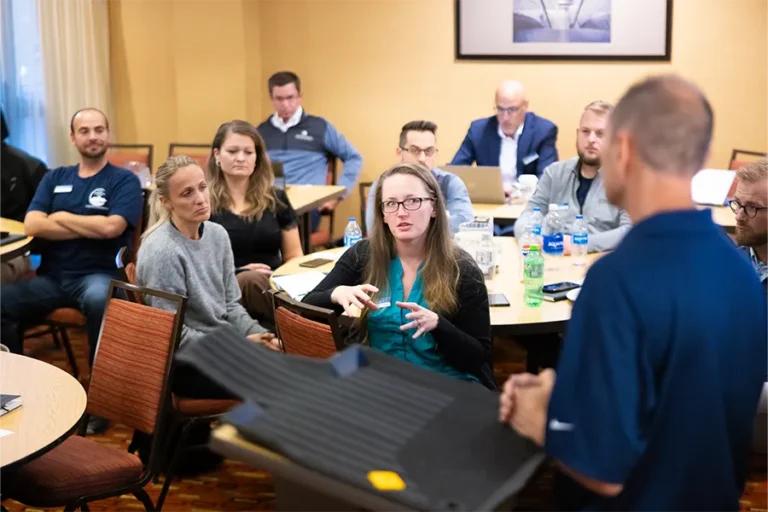
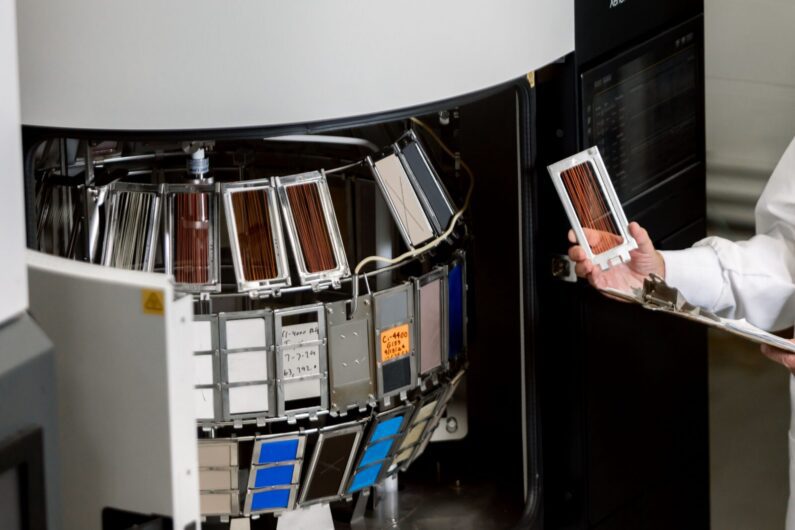
In this on-demand webinar, Americhem experts explain how accelerated weathering and outdoor exposure testing can help product teams identify potential failure modes earlier, compare material options, and make more confident durability decisions before commercialization.
Weathering Fundamentals
Yes, they do. Indoor products still experience UV and fluorescent lighting exposure, elevated temperatures, repeated cleaning or sterilization processes, and long-term storage conditions that affect performance. There are many test methods and specifications published specifically for indoor products.
It’s helpful to think of it less as “how much is enough” and more as “have we answered the question we’re trying to answer?” The amount of testing truly depends on the risk associated with the application. A decorative product likely needs significantly less testing than a building and construction product expected to perform for decades. The goal is to generate enough information to make confident development decisions without over-testing. There are three common approaches: testing until failure, testing to a specified radiant exposure, or testing for a defined duration. Some specifications even outline how long to weather a material, what criteria to measure, and the pass/fail requirements.
Xenon Arc testing is often selected when a broad-spectrum light source that more closely simulates natural sunlight is desired, particularly for applications exposed to outdoor environments. Fluorescent UV testing is often used when UV degradation is the primary concern and a more targeted, accelerated exposure is appropriate. The best choice depends on the application, expected service environment, material type, and the failure mechanisms being evaluated.
Yes, gloss change can be an indicator of material degradation. Weathering can alter a material’s surface through oxidation, roughening, microcracking, or other degradation mechanisms, resulting in gloss loss. However, the significance of gloss change depends on the application. In some cases, it may be primarily an aesthetic concern, while in others it can signal broader surface degradation that may warrant further evaluation.
Not necessarily, but darker colors often absorb more heat, which can introduce additional thermal stress. Performance depends on the entire formulation, not just the color. You can have a dark color, but if the formulation as a whole is robust, you’ll be better positioned for long-term performance.
There are a few polymers that are inherently UV stable, but most are not. Light energy interacts with the polymer chains. Imagine the molecules are linked by springs. When light hits them, those springs begin to vibrate back and forth. Over time, that vibration overcomes the bond strength and begins breaking the polymer chains down. That’s why a stabilization mechanism is needed to either absorb or convert the light energy.
Developing the Right Testing Strategy
There are software tools that can model aspects of material performance and environmental exposure, but accurately predicting long-term weathering behavior remains challenging. Real-world durability is influenced by many interacting variables, including UV exposure, temperature, moisture, geography, product design, and material formulation. As a result, physical weathering testing remains an important tool for validating performance and identifying potential failure modes.
The recommended test method will vary depending on the application. From a design standpoint, the goal is first to understand the actual service environment and identify the expected temperature and humidity conditions. Then, select a test method that introduces the relevant moisture and thermal stresses. Another consideration is the testing equipment being used. A vertical rack weatherometer may be best in some cases, whereas a flat-array weatherometer may be better in others, such as for deck boards where moisture remains present for longer.
Condensation is really a moisturemanagement challenge driven by temperature differences. The key is understanding where moisture forms, how long it remains, and what failure mechanisms it may create. We typically evaluate those risks through humidity, condensation, and thermal cycling exposures while also considering both material selection and product design.
It would depend on the application’s service environment and expected service life. You would want to consider whether the part will experience additional stresses, such as bending, stretching, or repeated vibration that may contribute to product fatigue, in addition to traditional weathering factors such as UV exposure, temperature cycling, and moisture.
Lab aging conditions should be driven primarily by the real service environment and the failure modes you are trying to reproduce. Typically, you start with field conditions (UV exposure, temperature, moisture cycles, and chemical contact) and then map those to standardized frameworks (e.g., ISO 4892, ASTM G154, SAE J2527) to define spectral output, irradiance, temperature, and wet/dry or humidity cycles. The key is not to “maximize severity,” but to accelerate relevant degradation mechanisms without introducing nonrepresentative ones.
Failure modes are best separated using a controlled, one-stressor-at-a-time or factorial approach. For example, isolate UV-only, thermal-only, chemical exposure-only, and then combined exposures to understand interactions. Post-exposure analysis (mechanical property retention, spectroscopy, microscopy, color change, etc.) helps identify which mechanism drove the damage. Correlation to service conditions comes from matching the dominant field stressors and validating whether combined-stress tests reproduce the same failure signatures seen in real-world samples.
Understanding Failure Mechanisms
Plasticizer migration and weathering can definitely be related, particularly in flexible polymer systems. Weathering can accelerate plasticizer loss or migration, especially through heat and UV exposure. As plasticizers leave the material, polymers often become stiffer and more brittle, which can shift failure modes from simple cosmetic changes to cracking, embrittlement, or reduced impact performance.
Yes, stress cracking is something that can be evaluated, although the approach depends on the application and the specific concern. A material may perform well under load alone and perform well in a chemical or environmental exposure alone, but the combination can lead to cracking or premature failure. As UV breaks polymer chains, the material can become more brittle and lose ductility. That degraded surface layer may then be more susceptible to crack initiation when the part is exposed to mechanical stresses, thermal cycling, impact, or other environmental factors. In weathering programs, we often evaluate properties such as impact strength, elongation, tensile properties, or visual cracking after exposure to understand whether the material is becoming more susceptible to failure. Depending on the application, dedicated stress-cracking evaluations may also be performed alongside weathering testing.
Yes, it’s possible, although it’s less common than fading or lightening. Weathering can sometimes cause a material to appear darker due to changes in surface chemistry or surface texture. For example, gloss changes can alter how light is reflected, making a color appear darker even if the actual pigment hasn’t changed significantly. In some cases, oxidation, moisture effects, or the degradation of certain additives can also contribute to a darkening or color shift.
Not every weathering failure progresses deeply into the bulk material; in some cases, the damage remains largely superficial and primarily impacts appearance. It depends on the material and the degradation mechanism. In many thermoplastics, weathering damage starts at the surface and can propagate inward over time, particularly when surface degradation leads to cracking or embrittlement. However, the extent of propagation depends on the polymer, part geometry, stabilizer package, and specific environmental stressors involved.
In addition to color fade on interior parts, we want to take a look at mechanical properties. Let’s take carpet fibers as an example. As the carpet is cleaned or walked upon, that mechanical agitation can start breaking the fibers out and lose fiber or face weight over time, and that certainly shows up in appearance as well as color change or fading. Chalking is less of a concern with indoor products. You may see something similar to what you may see in outdoor environments, like cracking or crazing of the surface, which would tend to look whiter and lighter, but not necessarily give you that chalky appearance.
The case study presented where the textile will be used under roofing is certainly one application where you may see that there is more of a functional part and an assembly as opposed to something on the outside that you would see. Another application from the geotextile sector would be reinforcing fabrics or slope erosion control fabrics, where you may just want to give the slope of a hill some extra integrity while vegetation grows in. In that case, you may start with something green, but you don’t really care after it’s six months later and it’s kind of white and degraded because by then all of the vegetation has grown in and covered it anyway. Those are two examples where mechanical stability and integrity would be more critical than the appearance of the product.
Dive Deeper with Americhem
Stay informed about the latest trends, technologies, and best practices in the world of polymers.