
Superior Multi-Fluid Repellency
Enhances fiber surface performance to resist wetting, wicking, and absorption from alcohol and other low-surface-energy fields, supporting barrier and functional fiber applications.
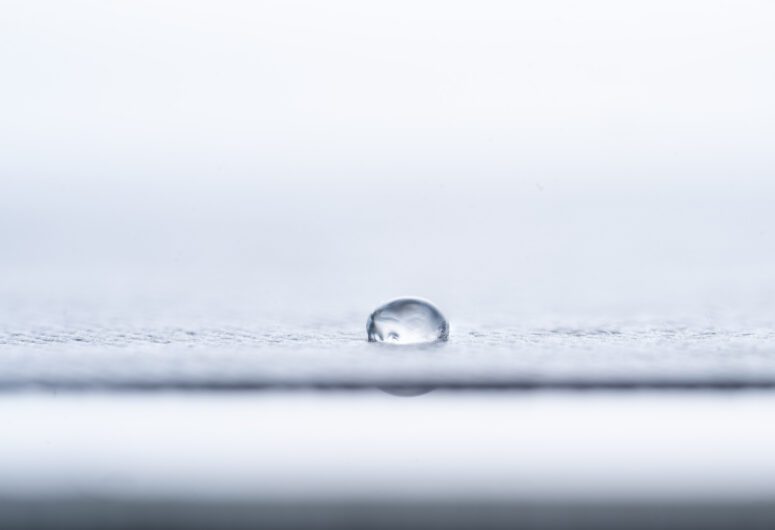
Repel fluids. Resist stains. Drive sustainability.
Americhem’s nDryve™ technology delivers PFAS-free performance, combining durability, multi-fluid protection, and ease of integration for hygiene, medical, textile, carpet, and industrial applications.

Global PFAS regulation is accelerating, and OEMs must transition to polymer‑level PFAS‑free solutions that maintain performance across diverse fiber systems.
nDryve™ provides PFAS- and PFOA-free, in‑melt fluid repellency designed for fiber and nonwoven systems. It resists alcohol and other low‑surface‑energy fluids, including water, oils, and challenging contaminants encountered in real‑world use.
Unlike topical finishes, nDryve™ is incorporated during melt processing, embedding fluid repellency directly into the fiber matrix. This enables repeatable performance, fewer processing steps, and reduced chemical handling—all while delivering durable resistance to alcohol and other low‑surface‑energy fluids.
nDryve™ is more than a repellent additive, it’s a polymer-integrated platform built to replace legacy chemistries while preserving barrier integrity, durability, and processing efficiency. Designed for modern fiber systems, it delivers scalable fluid protection that performs beyond the lab and into real-world use. nDryve™ offers these benefits and more:
Enhances fiber surface performance to resist wetting, wicking, and absorption from alcohol and other low-surface-energy fields, supporting barrier and functional fiber applications.
Material-level integration helps maintain repellency under repeated exposure to
alcohol-based formulations, aqueous solutions, and other challenging fluids
encountered during use and cleaning.
Designed for use across polymer-based fiber systems, supporting applications in medical, hygiene, textile, carpet, technical, and nonwoven fibers without reliance on surface-applied treatments.
Formulated as a PFAS/PFOS-free, in-melt solution that supports sustainability objectives while maintaining processing efficiency and consistent performance at scale.
From regulated medical settings to high-wear consumer and industrial applications, nDryve™ enables PFAS-free fluid protection across diverse fiber platforms. Designed for polymer-level integration, it supports consistent performance, processing efficiency, and long-term durability in environments where exposure to alcohol and other challenging fluids is routine.
Key considerations for integrating in-melt repellency into nonwoven and fiber applications without compromising performance or processability.
nDryve™ is designed as an in-melt technology platform and is implemented during polymer melt and fiber formation.
It is not a topical finishing treatment applied during dyeing or post-processing. The performance is engineered directly into the fiber structure, which supports durability under repeated exposure and reduces reliance on surface-applied chemistries.
For textile converters working downstream, collaboration typically involves working with fiber manufacturers to integrate the technology at the fiber stage.
Yes. Within the nDryve™ technology platform, different PFAS-free chemistries are developed depending on the specific fluid interaction requirement. Alcohol repellency, hydrophobic performance, stain resistance, and oleophobic challenges involve different polymer fluid interactions.
Rather than relying on a single chemistry, nDryve™ uses application specific in-melt formulations engineered for the targeted performance and polymer system. Oleophobic performance presents a higher technical challenge compared to hydrophobicity, and development is approached accordingly within the same PFAS-free, in-melt design framework.
Yes. Polymer chemistry significantly influences performance.
Polyolefins (e.g., PP) differ in polarity and crystallinity from engineering polymers such as PET or PA6. These differences affect additive dispersion, migration behavior, and overall fluid interaction.
As a result, optimized formulations are developed for polyolefin and engineering fiber systems, including PET and PA6. The core design principle is PFAS-free, in-melt integration remains consistent, but the chemistry is tailored to the polymer and end-use requirements.
nDryve™ is not based on a single chemistry and does not rely on PFAS.
Different PFAS-free chemistries are used within the platform depending on the target performance (e.g., alcohol repellency, hydrophobic performance, stain resistance).
Regarding mechanical properties, formulations are designed to maintain fiber processability and functional integrity. As with any additive system, loading level and polymer compatibility are important considerations.
From a recyclability standpoint, because the additive is integrated at typical in-melt loading levels and does not introduce fluorinated chemistry, the impact on end-of-life processing is generally more manageable than traditional PFAS-based systems. Specific evaluations depend on polymer type and recycling stream.
Loading levels depend on the target performance requirement, polymer system, and processing conditions.
For hydrophobic performance in PP fibers, relatively low in-melt loadings may be sufficient. More demanding multi-fluid repellency targets may require higher optimization.
Rather than using a one-size-fits-all loading, development typically involves collaboration to balance performance, processability, mechanical properties, and cost targets within the specific fiber application.

Let’s help you identify the right nDryve™ formulation for your medical, hygiene, textile, carpet, technical, or industrial fiber application—and navigate PFAS‑free material design with confidence.


